Pepsi Now: one message carried across store shelves and a music stage
Point-of-sale material and the Pepsi Now music programmes ran the same message, drink Pepsi eat better, to mass consumers and Vietnamese families.
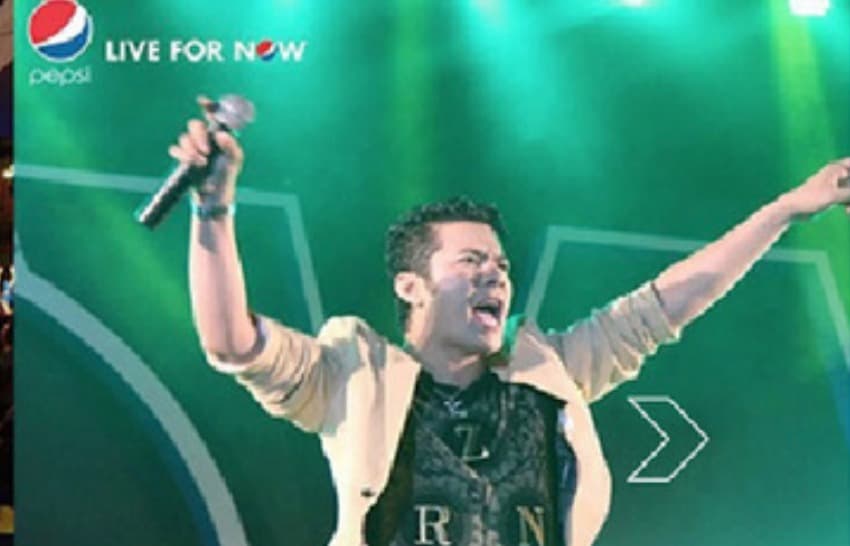
- Reach
- Reach ~10,000 people
- Duration
- Multi-store activation campaign
- Audience
- Mass consumers and Vietnamese families.
- Objective
- Communicate the message "Drink Pepsi, eat better" at points of sale and through the Pepsi Now music programs.
- Services provided
- POSM design, in-store activation, staging the music program stage.
The objective on record was to communicate the message drink Pepsi, eat better, at points of sale and through the Pepsi Now music programmes. The audience was mass consumers and Vietnamese families. Reach is recorded at around 10,000 people, and the entry is filed as a multi-store activation campaign rather than a single event.
Three services were delivered: point-of-sale material design, in-store activation, and staging the music programme stage. Those look like two unrelated disciplines until the message is read closely, at which point they become the same job done in two places.
On the music side the stage became the campaign's largest piece of point-of-sale material. A concert stage is a branded surface with a guaranteed audience and a fixed dwell time, which is exactly what a shelf display is trying to be and rarely achieves.
The pairing works because it reaches the same person in two different states. In the aisle a shopper is deciding, at a concert the same person is enjoying something. Running one message across both means the second occasion does the remembering that the first occasion needs.
Drink Pepsi, eat better is a usage message rather than an awareness message. It does not ask anyone to learn the brand, it asks them to pair it with a meal. Messages of that kind belong where the meal is bought, which is why the retail half of this campaign was not optional.
Questions we ask afterwards
- What was the single problem this event was hired to solve?
- The objective names one message and two places to put it: drink Pepsi, eat better, carried at points of sale and through the Pepsi Now music programmes. The problem sits inside the message itself, because this is a usage instruction rather than an awareness line and does not ask anyone to learn the brand, only to pair it with a meal. A message about pairing has to appear where the meal is bought.
- What could a room do here that a video, a mailer or a showroom could not?
- The two halves of this campaign do what a single channel cannot, which is to reach the same person in two different states. In the aisle a shopper is deciding and a display has seconds; at a Pepsi Now stage the same person is enjoying an evening and the brand has hours of attention it did not have to interrupt. Read that way the stage is the campaign's largest piece of point-of-sale material, a branded surface with a guaranteed audience and a fixed dwell time, which is what a shelf display attempts and rarely gets.
- What changed between the first concept and the version that was actually built?
- We hold no concept-stage material for this campaign. The three recorded services, point-of-sale material design, in-store activation and staging the music programme stage, are what was delivered, and they sit across two disciplines that are normally briefed separately. Where a campaign of this shape moves between concept and execution it moves toward consistency, because the retail half and the stage half are made by different teams on different timelines and holding one message across both is a coordination problem before it is a design one.
- Which element took the longest to get right, and what made it difficult?
- No build log is held, so this is judgement. The hardest thing to get right across a split campaign is one message carrying at two very different distances, since drink Pepsi, eat better has to be readable on a shelf strip at arm's length and on a stage surface from the back of a crowd. Those are two different typographic problems with the same words, and a lockup that solves one usually fails the other until it is drawn twice.
- What was the hardest constraint on site — venue, load-in window, power, weather, permits or something else?
- The record covers this as a multi-store campaign in Vietnam with no site reports attached, so no single constraint can be cited. Structurally the two halves have opposite constraints, since retail is bound by what each host store permits in floor space and trading hours, while the music stage is bound by a load-in window, power and a fixed show time. A campaign spanning both runs on two production calendars that share only the artwork.
- How were guests moved through the space, and what happened at the tightest point in the flow?
- Two flows exist here and neither is recorded in our sources. In store, shoppers move on the route the retailer set and the activation has to sit beside it rather than across it. At the music programmes the flow is a crowd arriving for a show, where the tight point is always the approach to the stage, and a brand that places its material only at the front reaches the people who were already closest to it.
- What was measured afterwards, and what did the numbers say?
- One figure is recorded: reach of around 10,000 people. Nothing separates that number between the retail half and the music half, and no purchase, recall or sampling measure is held. Since the objective was to communicate a usage message, reach reports how many were exposed rather than whether the pairing was taken up, so the recorded number stops short of the stated aim.
- If the same brief arrived tomorrow, what would be done differently?
- The reach figure would be split by channel before anything else, because one combined number cannot show whether the retail half or the stage half carried the message. On the usage claim itself we would add a single question at the point of sampling, whether the drink is being taken with a meal, since that is the only thing the campaign actually asked anyone to change. Both are cheap at the time and impossible to reconstruct afterwards.